best-of · Best
Best 3D Printers for Beginners (2026)
By Leo · Updated 2026-08-13
How we picked (and what we ignored)
Beginner guides usually rank by features. Wrong metric. The biggest risk to a new printer owner isn’t missing features — it’s quitting after two weekends of failed prints. So this list ranks by out-of-box success rate and community support depth, informed by manufacturer specs and consistently reported community experience (our protocol data lands soon; see how we test). We ignored: giant spec sheets, laser-engraver combos, and anything requiring assembly as a first machine. (Buying for a child rather than yourself? That’s a different purchase — see best 3D printers for kids for age-by-age picks.)
Best overall for beginners: Bambu Lab A1 Mini ($249)
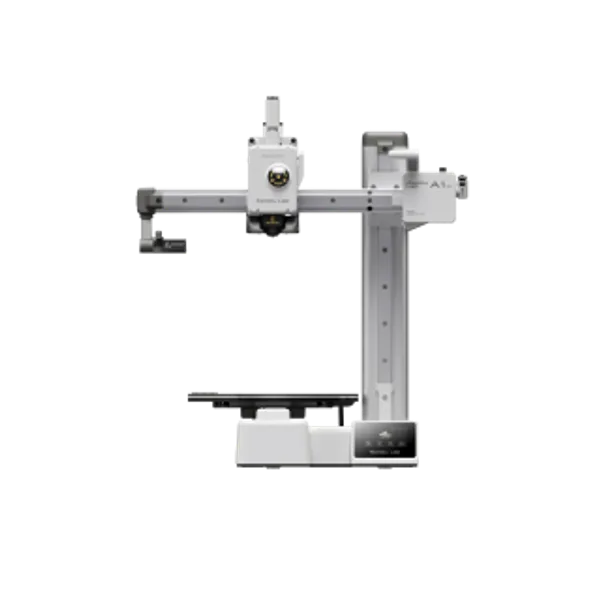
Bambu Lab
Bambu Lab A1 Mini
- build volume
- 180 × 180 × 180 mm
- max speed
- 500 mm/s
- enclosure
- No
Auto-calibration, stock profiles that work, and a support ecosystem where your exact problem has already been solved. The 180 mm bed is the compromise — and for first-year printing (widgets, miniatures, household fixes) it’s rarely the limit people fear. Full trade-offs in A1 vs A1 Mini.
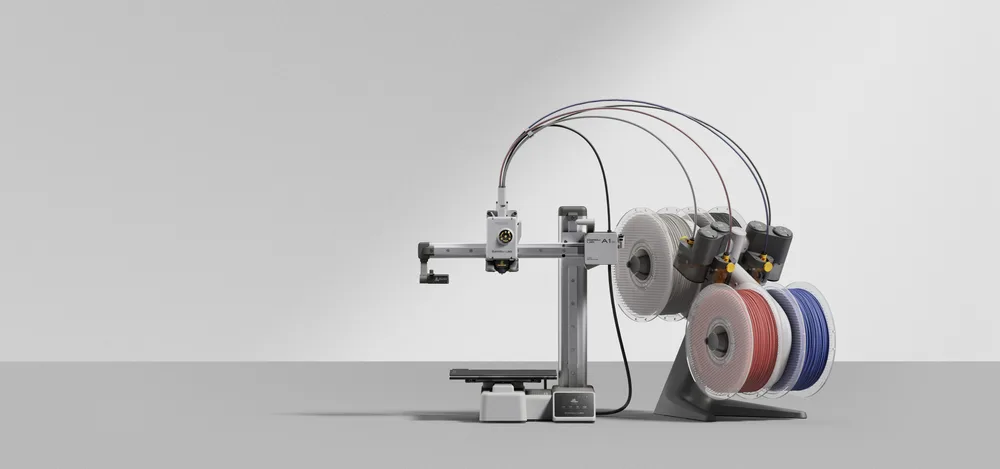
Best if you can stretch: Bambu Lab A1 ($399)
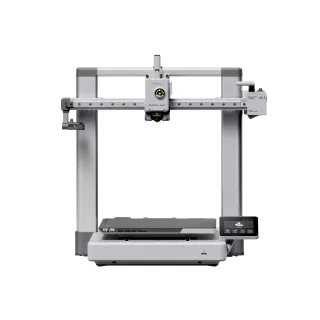
Bambu Lab
Bambu Lab A1
- build volume
- 256 × 256 × 256 mm
- max speed
- 500 mm/s
- enclosure
- No
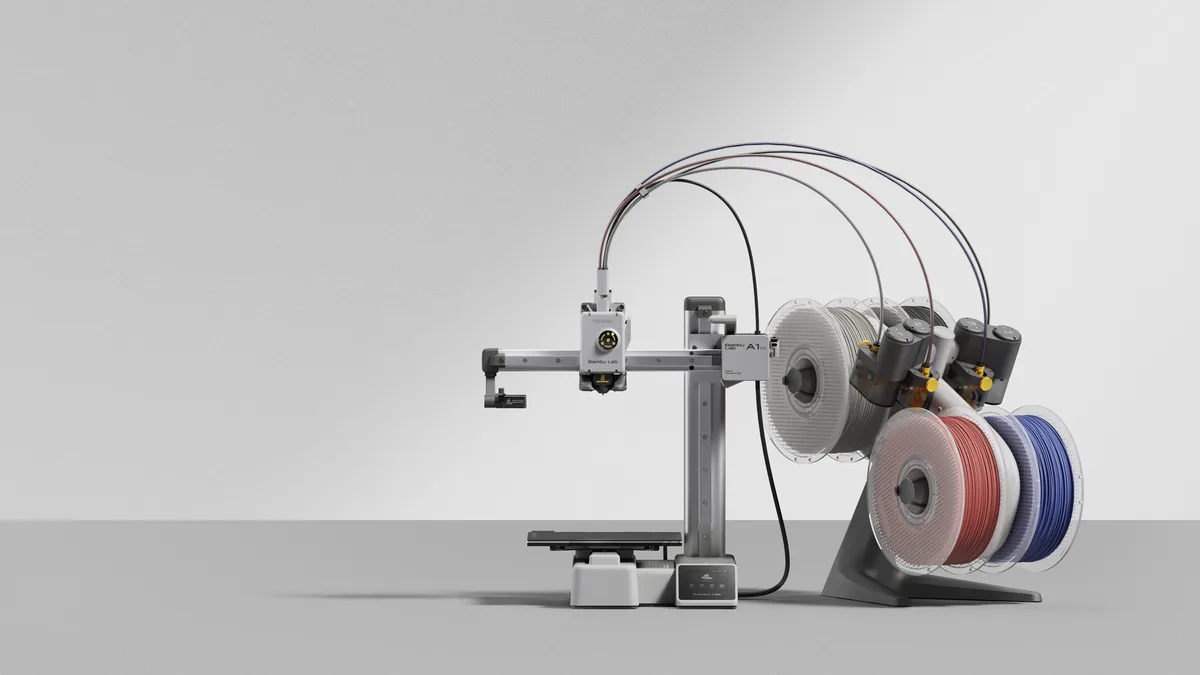
Same ease, 256 mm bed, and room to grow into AMS lite multi-material later. If the budget reaches $399, this is the machine that stays relevant longest — the full review covers why.
Best on a hard budget: Creality Ender 3 V3 SE ($199)

Creality
Creality Ender 3 V3 SE
- build volume
- 220 × 220 × 250 mm
- max speed
- 180 mm/s (realistic)
- enclosure
- No
Slower, simpler, but genuinely reliable at the price — and the largest troubleshooting community in the hobby. The right pick when $200 is the ceiling. See under-$200 guide for the full picture.
Best for apartment dwellers wanting PETG: Elegoo Centauri Carbon ($299)
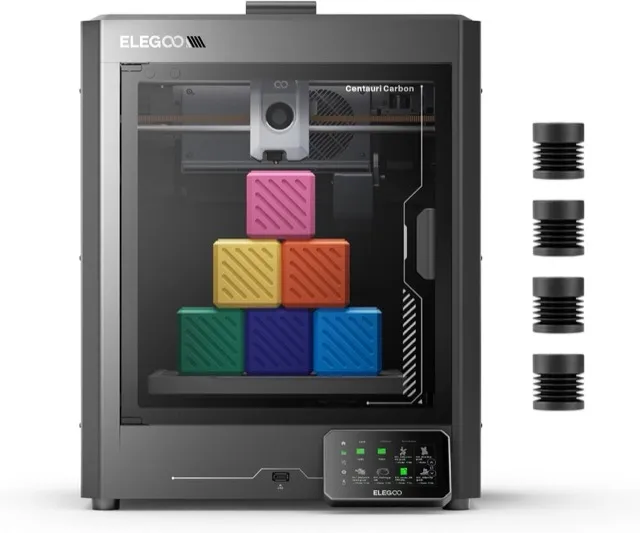
Elegoo
Elegoo Centauri Carbon
- build volume
- 256 × 256 × 256 mm
- max speed
- 500 mm/s
- enclosure
- Yes
An enclosed CoreXY at $299 — quieter operation and a chamber that makes PETG and TGU-adjacent materials less fussy. Slightly younger ecosystem than Bambu’s; read Centauri vs P1S for what that means in practice.
What every beginner actually needs after the printer
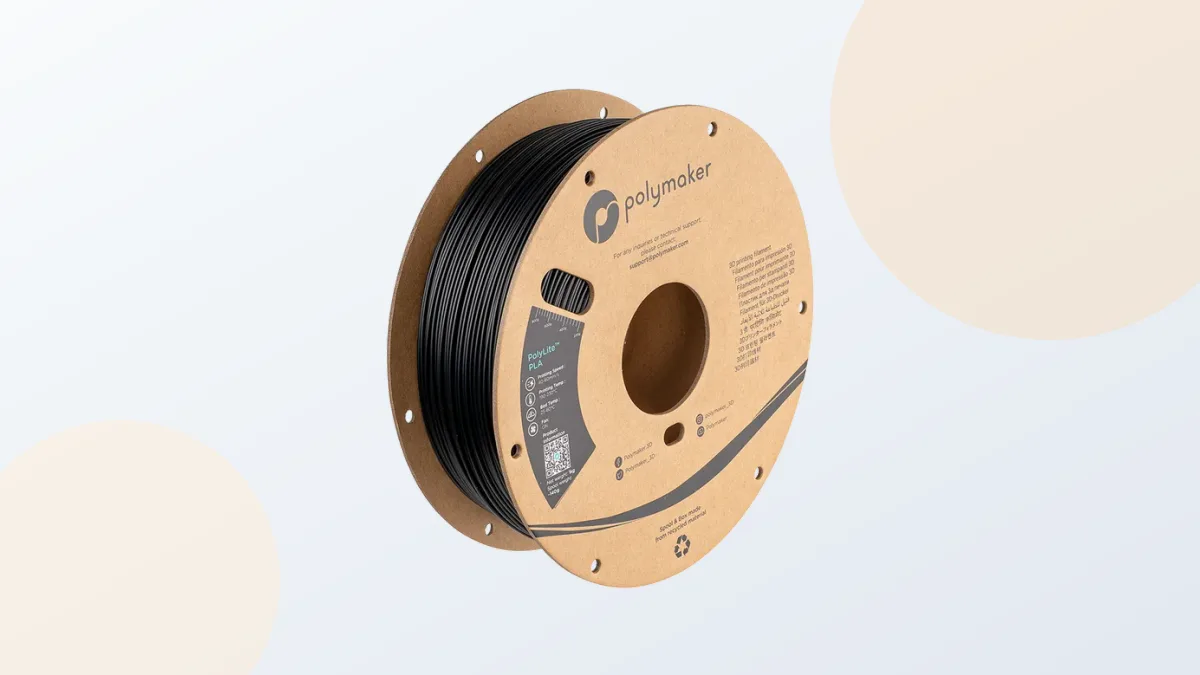
- Two spools of PLA — one name brand to learn on (bad filament teaches nothing), one cheap for experiments
- A scraper and isopropyl alcohol — 90% of “printer broken” is a dirty bed
- The slicer your printer’s manufacturer ships — don’t start with third-party slicers
- Our start-here guide — first prints, settings that matter, and the three failures everyone hits
What to avoid
- Resin printers as a first machine (fumes, wash/cure workflow — a second machine, not a first)
- Used machines “for the price” — you inherit someone else’s unresolved problems, with no warranty
- Any machine that doesn’t have auto bed leveling in 2026 — it’s not a luxury anymore
FAQ
What is the best 3D printer for a total beginner?
The Bambu Lab A1 Mini ($249): auto-calibration and reliable stock profiles mean early prints succeed, which is what keeps people in the hobby. On a $200 cap, the Creality Ender 3 V3 SE is the reliable pick.
How much should I spend on my first 3D printer?
$200–400 buys a machine that works out of the box in 2026. Below that, reliability drops sharply; above that, you're paying for features (enclosure, multi-color, build volume) a first-month printer owner won't use yet.
Do I need an enclosed 3D printer as a beginner?
No — PLA, the beginner material, doesn't need one. Enclosures matter for PETG/TPU consistency and are essential for ABS/ASA. Start open-frame with PLA; upgrade when a material problem forces the question.